
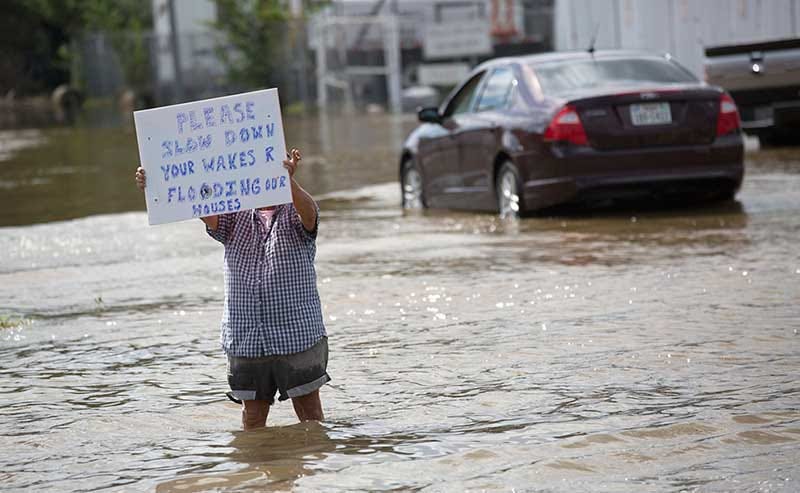
In the past few decades, climate change has become a growing concern for humanity. People have already noticed changes in the weather, temperature, and seasonal patterns. One of these changes in weather has caused historically high flooding in Hawaii. Hawaii’s governor, Josh Green, has said over 5000 people had to be evacuated after 50 inches of rain fell in 10 days. This has caused damage to homes and infrastructure while raising concerns for the environment and wildlife on the islands.
A major effect of climate change is global warming, the long-term rising of the atmosphere’s temperature. Aquatic science teacher David Sparks believes that this temperature change affects weather patterns.
“When you have changes with the atmosphere in the heating and the atmosphere, it does affect the weather pattern. So my theory is that we’re going to have more severe weather patterns in the future if the heating continues,” Sparks said.
These types of severe weather patterns are already forming, especially in coastal areas. These patterns have also become more structurally devastating because population density has increased, both of which are things Sparks has noticed.
“We didn’t have a lot of hurricanes last year, but the hurricanes are increasing in intensity. Another thing that we don’t think about is why these floods are so devastating. [There are] more people on the earth and populations going up, and you have more people living in these areas like Hawaii,” Sparks said. “So, years ago, when these weather events happened, nobody noticed, because there weren’t any people around to notice it. Now that you have more people living there, and you have more people living on the coast in the United States, they enjoy the benefits of living on the coast until the storms hit, and they have to deal with that.”
The effects this extreme weather has on the land can vary, but some destruction is always expected. Junior Lily Sexton lists out the ways this ruination affects both animals and humans.
“It affects wildlife, because a lot of these [events] can cause habitat destruction and fragmentation, so animals and wildlife lose their homes. It affects humans because whenever these weather changes happen, especially in places that are more coastal, it can cause damages, loss of life and a lot of harm to people,” Sexton said.
While people living on the coast know of the potential weather risks, Sparks believes it’s especially risky for people in Hawaii as they’re less likely to receive aid and media attention due to their separation from mainland America.
“You’re building on [land] structures that are unstable. People that build on the coast know that there’s always a chance that they’re going to lose everything, and that’s probably why the flooding insurance is so bad. I think with this story, one issue that we don’t think about is Hawaii is so far away that we feel like we’re not really connected to them, but they are one of our states. I think a lot of times we forget about it because it seems so far away,” Sparks said.
Solutions to climate change do exist, and while they are not immediate, they can help reduce the effects of it on the weather over time. Sexton believes these solutions start with being more environmentally conscious.
“We can prevent these kinds of things from happening by caring more about the environment, doing things like recycling and reducing emissions from fossil fuel burning. If we can reduce that and be more environmentally friendly, then we can reduce a lot of the weather changes that happen,” Sexton said.
Before solutions are enacted, however, these disasters still need to be managed. The Federal Emergency Management Agency (FEMA) was created for this purpose, but Sparks points out that it can’t be effective without proper funding.
“I think you just need to be realistic that [disasters] are going to happen, and that you need to make sure that you’re prepared. Donat[ing] to organizations like the Red Cross helps. I also know one thing that’s a problem right now is FEMA,” Sparks said. “FEMA is not funded like it should have been, and so when it’s not funded, and they don’t get to the people in a quick amount of time, that can make those devastations even worse. So we’ve got to make sure that those funds are replenished and that we’re paying to help rebuild when it does happen. We need to remember the state of Hawaii because [this disaster] is a tragedy.”